SSL & Security Concerns

Cory Cranfill • September 15, 2022

Anyone with a computer is well aware of security concerns on the Internet. As time goes on, security and internet safety becomes more and more of an issue. It’s clear that hackers are becoming more advanced and will continue to find ways to steal our data. With a large part of our lives spent online, it’s just a matter of time before hackers affect you. If you own a business, the sheer amount of valuable information you are responsible for is something to be concerned about. Moving into 2021, data safety will continue to be a growing issue. In this blog, we will discuss SSL and security concerns for your company's website and the types of sites you may be visiting.

What’s an SSL?


SSL stands for Secure Sockets Layer, also known as Transport Layer Security. This may sound like nerdy talk that doesn't matter much, but the fact is that you interact with SSLs every day. They are specific technology designed to keep your Internet connection safe, especially when secure data is involved. SSLs run a protocol of data encryption to make sure third parties can't see what either party is viewing or sending.

This includes sensitive and non-sensitive information, such as passwords, names, banking information, and more. This setup uses a handshaking procedure that both the parties involved agree to use. The data transaction creates a cipher so information can be sent from one to the other in an encrypted format. Theoretically, even if a third party were to intercept your data, it would be gibberish since they don't have the means to decipher it.

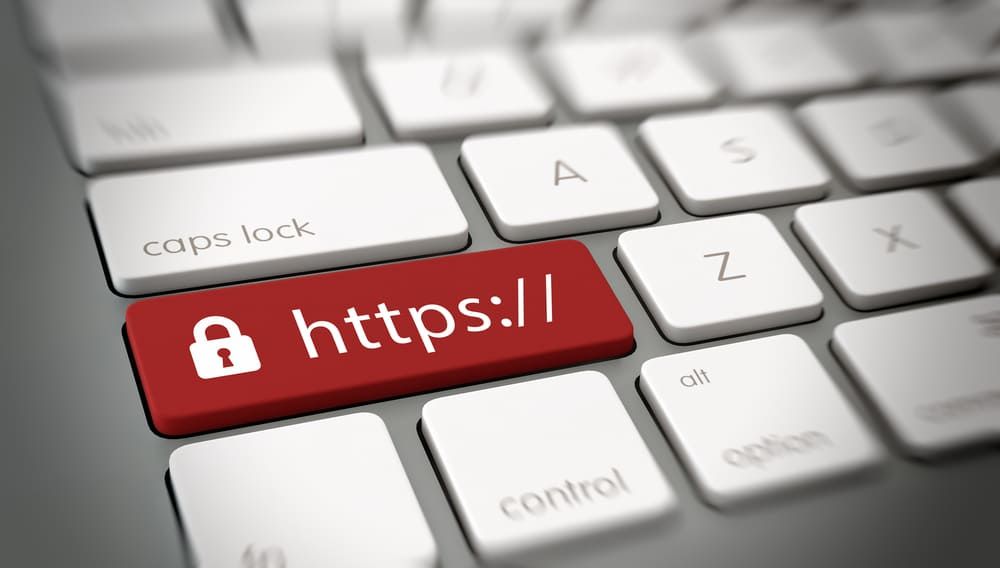
This is essential for safe Internet communication these days. You and your company likely send highly-sensitive information back and forth online all day long. What used to be something kept safe in a drawer can now become public information because of a malicious hacker. This layer of safety is so standard we don’t even notice it. Sites that have an “HTTPS” in front of their address use some form of SSL or TLS.

Managing a TLS/SSL


Not only do you want to keep your company's information private, but you need to make sure that customer information stays private as well. Unfortunately, SSLs and TLSs are not a one-and-done procedure. Like any other security protocol, SSLs change over the years. Make sure that any certificate your company's website uses is up to date and effective. You can do this by installing updates as they are released.

Think of the SSL protocol like a deadbolt. Having a deadbolt on your door is much safer than a locking doorknob. Yes, there are always people who know how to compromise it, but it is still much safer. Over the years, deadbolt technology has improved and evolved as people learn to bypass obsolete technology. Sometimes, however, it takes working with an experienced locksmith to have it installed correctly.

SSLs/TLSs are certainly much better options than nothing at all. However, these protocols, particularly older versions, are still prone to many vulnerabilities. There are numerous common attacks that hackers use to break this encryption. And some of these threats have very colorful names. For example, POODLE, BEAST, CRIME, BREACH, and HEARTBLEED are commonly used attacks, and they are highly successful.

Keep Yourself and Your Customers Safe


Having your company's private information exposed to the highest bidder can have devastating effects on your operations. Stolen customer information due to a lack of care in your communications could result in lawsuits and legal trouble. Customers have well-deserved expectations: when they share information with you, it needs to be kept confidential and secure.

This can be especially true in organizations that deal with sensitive information regularly, such as financial institutions and medical centers. In the hacking community, there is a highly lucrative market for personal information. The dark web is flooded with people selling private information databases to the highest bidder — and there is always "a highest" bidder.

If you want to avoid liability, make sure your security protocols are up to date. It is also critical that you maintain them professionally. A relatively small investment in this area of security can end up saving large amounts of money and possibly your business itself.

We regularly report on attacks that businesses like yours face daily. But we don't always mention that many of these attacks are successful because the victim has a lax security protocol. The last thing we would want is for you to be another statistic. If your SSL/TLS certificates are getting old and dusty, or (even worse) you don't have any at all, now would be the best time to contact us. As 2021 quickly approaches, these threats are only going to be more significant and more challenging to handle.

Our team of security professionals is one of the most experienced in the business. The web can be a scary place, and the last thing you want is to be caught unprepared! By making sure your SSL/TLS certificates are in perfect order, you can rest a little bit easier at night.

HCS Technical Services
Woman with headset smiles while using a computer in an office setting.
March 11, 2026
Unreliable IT quietly drives employee frustration and turnover. Learn how smarter IT reduces friction, improves morale, and protects retention.
Four people collaborating around a glowing cloud with documents. They hold tablets in a bright office.
March 4, 2026
Use AI to improve productivity without exposing sensitive data. Learn how Central Texas businesses can deploy AI securely and reduce cyber risk.
Hand holding a tablet with a glowing cloud icon above, against a dark blue background.
February 25, 2026
Cloud compliance failures create legal, financial, and security risk. Learn how Central Texas businesses can manage regulations and avoid costly mistakes.
Puzzle pieces hovering over a circuit board, with glowing blue light.
February 18, 2026
Most modern businesses rely on third-party applications to operate. Payments, customer support, analytics, file sharing, automation. Nearly every workflow depends on integrations. But every integration you enable creates another doorway into your environment. A growing number of data breaches now originate with third-party vendors, not direct attacks. When an integration is compromised, attackers don’t stop at the app. They move into your systems, your data, and your operations. For businesses in San Marcos and across Central Texas, the message is clear: integrations are powerful, but they must be vetted and monitored like any other critical system. Why Third-Party Integrations Deserve More Attention Third-party tools exist because building everything in-house isn’t practical. APIs speed up deployment, reduce cost, and give teams functionality they couldn’t otherwise support. But integrations also: Expand your attack surface Inherit someone else’s security decisions Increase your compliance responsibilities If a connected vendor fails, your business absorbs the downtime, data exposure, and reputational damage. The Real Risks Behind Third-Party Apps Security Exposure A poorly secured plugin or API can introduce vulnerabilities that bypass your internal controls. If attackers compromise the vendor, they often use that trusted connection to move laterally into your environment. Privacy and Compliance Gaps Even well-known vendors can mishandle data. They could store it in the wrong region, share it with subcontractors, or use it beyond stated purposes. Those mistakes still land on your business. Operational and Financial Impact When integrations fail, workflows break. Billing systems stall. Data stops syncing. In many cases, outages and financial losses trace back to weak integration oversight. A Practical Checklist Before Connecting Any Third-Party App Before approving a new integration, review it through a business-risk lens, not just convenience. Security Credentials and Audits Look for evidence of real security practices such as SOC 2 reports, ISO certifications, or recent penetration testing. Vendors should be able to explain how they handle vulnerabilities. Encryption Standards Data should be encrypted both in transit and at rest using modern protocols. If documentation is vague, that’s a red flag. Authentication and Access Controls Integrations should support modern authentication standards and enforce least-privilege access. Tokens should rotate and expire automatically. Logging and Monitoring The vendor should provide detailed logs and alerts. Your own systems should also monitor integration activity to detect unusual behavior. Versioning and Change Management Understand how updates, deprecations, and breaking changes are communicated. Poor version control causes unexpected outages. Rate Limits and Abuse Controls Throttling protects both sides. Without it, misuse or automated attacks can overwhelm systems. Contracts and Accountability Agreements should define security expectations, response timelines, and your right to request security information. Data Location and Jurisdiction Know exactly where data is stored and processed. This matters for privacy laws, contracts, and client trust. Resilience and Recovery Ask how the vendor handles backups, failover, and disaster recovery. Integrations should not be a single point of failure. Dependencies and Supply Chain Risk Understand what third-party libraries and services the vendor relies on. A weak dependency can become your problem overnight. Treat Integrations as Ongoing Risk, Not One-Time Approvals Integration reviews shouldn’t stop once a tool is connected. Vendors change, platforms evolve, and risks shift over time. Regular reviews, monitoring, and clear contracts prevent the kind of surprises that lead to outages, breaches, and emergency cleanup. If you’re unsure how exposed your current stack is or need help building a repeatable vetting process, HCS can help. We work with Central Texas businesses to secure integrations in a way that supports real operations, not just compliance checkboxes. Contact HCS to review your integrations and eliminate unnecessary risk before it becomes a problem.
Hands typing on a laptop keyboard, illuminated by the glowing screen displaying lines of code.
February 11, 2026
Stolen credentials are a leading cause of breaches. Learn how MFA, passwordless logins, and Zero Trust protect business accounts from attackers.
February 4, 2026
Forgotten contractor accounts create serious security risk. Learn how Conditional Access automates access control and protects your business in under an hour.
White Wi-Fi signal icon on a light blue circular button.
January 28, 2026
Shared guest Wi-Fi passwords put your business at risk. Learn how a Zero Trust approach secures guest access without impacting daily operations.
Robot analyzing charts on a futuristic desk. Blue and green bar graphs display data.
January 21, 2026
Public AI tools can expose sensitive business data. Learn six practical ways to prevent AI-related data leaks and protect your clients and operations.
Person working on a laptop with overlaid icons related to legal and compliance matters.
January 14, 2026
Privacy laws are tightening in 2026. Use this compliance checklist to reduce risk, protect customer data, and keep your business aligned with new regulations.
Person in blue jacket using a tablet, surrounded by digital interface icons at a desk.
January 6, 2026
Without clear policies, ChatGPT can expose your business to risk. Learn five rules Central Texas businesses need for safe, responsible AI adoption.
More Posts