
Maximizing Cybersecurity ROI Through Employee Security Awareness Training
info • July 10, 2025

Maximizing Cybersecurity ROI Through Employee Security Awareness Training

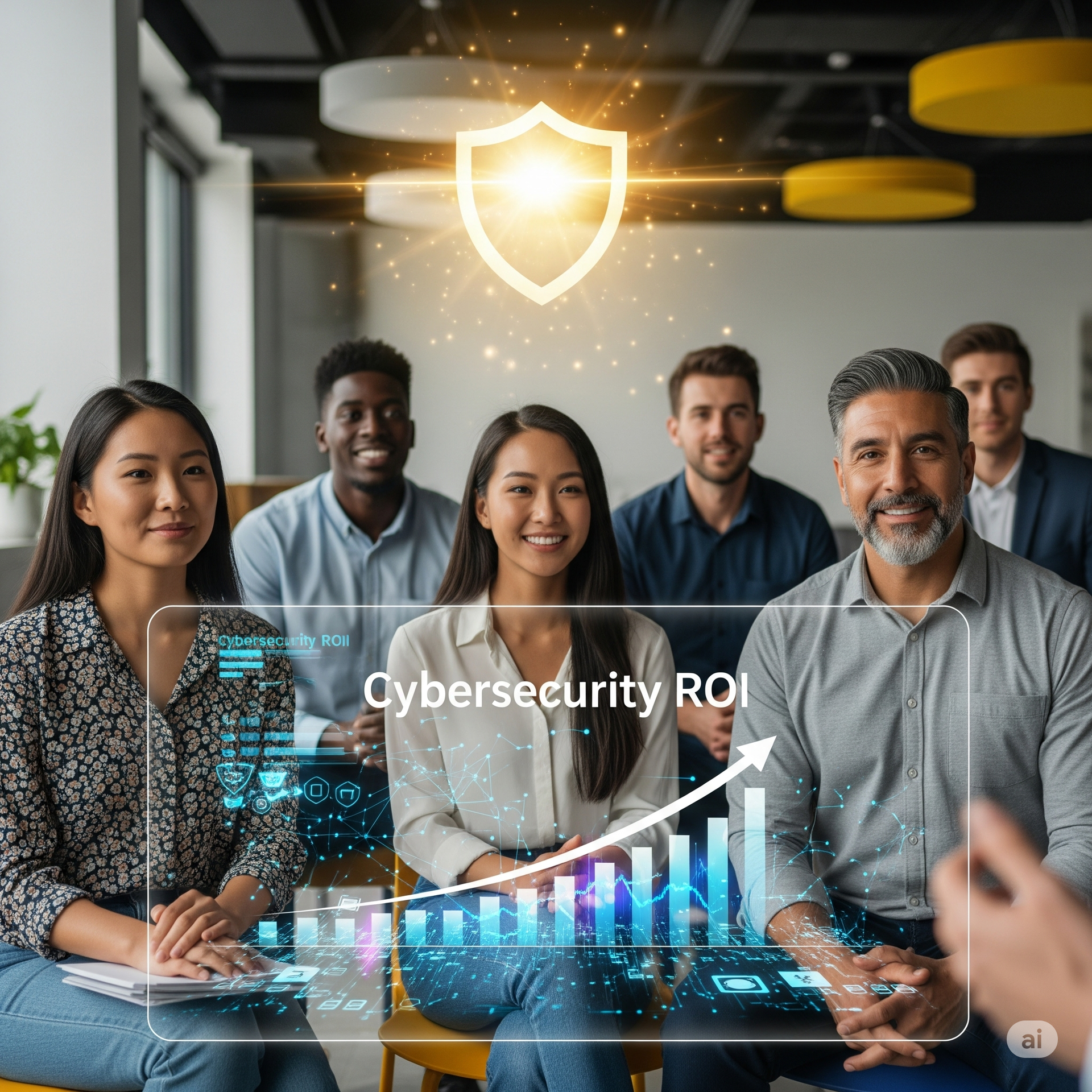
A group of people are sitting in chairs in front of a screen that says cybersecurity roi.

Unlocking the Full Potential of Cybersecurity Investments

In an era where digital threats loom large, businesses are increasingly investing in cybersecurity measures to protect their assets. However, maximizing the return on these investments requires more than just purchasing the latest technology; it demands a comprehensive approach that includes employee security awareness training. This training is a critical component in the cybersecurity strategy of businesses in San Marcos, Austin, Wimberley, and New Braunfels, Texas. Employees are often the weakest link in the cybersecurity chain, inadvertently exposing the organization to risks through phishing scams and other social engineering tactics. By investing in training that focuses on teaching employees to recognize and respond to cyber threats, businesses can significantly enhance their security posture. Moreover, a security-conscious workforce plays an essential role in protecting sensitive company data, thereby preventing costly breaches and maintaining customer trust. Effective training programs not only cover the basic principles of cybersecurity but also instill a culture of vigilance and proactive threat management among employees.

Key Elements of Effective Security Awareness Training

To ensure the success of a security awareness training program, businesses must focus on certain key elements. The content should be tailored to the specific threats that employees might encounter in their roles. Training sessions must cover a wide array of topics including recognizing phishing attempts, the importance of strong passwords, and the secure handling of sensitive information. Engaging delivery methods are crucial to keeping the attention of employees. Incorporating interactive modules, real-world scenarios, and regular assessments can enhance understanding and retention. Continuous education is vital, given the evolving nature of cyber threats. Regularly scheduled training sessions help keep staff updated on new vulnerabilities and security practices. Feedback mechanisms are also important, as they allow employees to express concerns and provide insights into potential security gaps that the organization might not be aware of. This feedback can then be integrated into the training program to ensure it addresses the most pressing security issues relevant to the organization.

The Role of Management in Supporting Security Awareness

While employees are at the forefront of cybersecurity efforts, management plays a crucial role in ensuring the success of security awareness programs. Leadership must prioritize cybersecurity as a core element of the company's overall strategy and communicate its importance across all levels of the organization. Management support can be demonstrated through budget allocation for training resources and technology. Additionally, fostering a culture of transparency and open communication encourages employees to report suspicious activities without fear of reprisals. Creating a recognition system for employees who demonstrate exceptional cybersecurity practices can further incentivize participation and foster a spirit of continuous improvement around security measures. Furthermore, executive-level buy-in reinforces the message that cybersecurity is a shared responsibility, integrating it into the organization’s fabric rather than treating it as a standalone initiative. This top-down approach ensures that everyone within the business understands their role in cybersecurity and works collaboratively towards minimizing vulnerabilities.

Enhancing Cybersecurity ROI: The Tangible Benefits

Investing in employee security awareness training yields substantial returns by significantly enhancing an organization’s overall cybersecurity framework. One of the most immediate benefits is the reduction in incident response costs, as trained employees are less likely to fall victim to phishing attacks and other common exploits. By preventing breaches, companies can also avoid the extensive financial and reputational damages associated with data breaches, safeguarding not only the bottom line but also customer trust. Training employees to be vigilant cyber sentinels helps in early detection and reporting of threats, which can drastically cut down the time and resources spent on managing incidents. Furthermore, a well-trained workforce can contribute to compliance with industry regulations such as GDPR and HIPAA, thereby avoiding hefty fines for non-compliance. The improvement in organizational morale and employee confidence when tackling security threats is an often-overlooked benefit that can lead to greater productivity and responsibility towards cyber hygiene in the workplace.

Ensuring a Secure Future Through Continued Education

As cyber threats become increasingly sophisticated, the need for ongoing employee education in cybersecurity cannot be overstated. Businesses in San Marcos, Austin, Wimberley, and New Braunfels must adopt a proactive stance by implementing structured and continuous training programs that evolve with the threat landscape. Organizations should focus on developing a curriculum that adapts to new vulnerabilities and incorporates lessons learned from past incidents. Partnering with a specialized IT firm like HCS Technical Services can augment an organization’s training efforts by providing expert insights and cutting-edge resources tailored to specific business needs. The long-term commitment to training translates into a resilient cybersecurity culture where employees remain informed, vigilant, and prepared to act as the first line of defense against cyber threats. In the rapidly changing digital environment, continued investment in security awareness training solidifies the foundation for a secure future, ultimately maximizing the return on cybersecurity investments for businesses of all sizes.

HCS Technical Services

Puzzle pieces hovering over a circuit board, with glowing blue light.
February 18, 2026
Most modern businesses rely on third-party applications to operate. Payments, customer support, analytics, file sharing, automation. Nearly every workflow depends on integrations. But every integration you enable creates another doorway into your environment. A growing number of data breaches now originate with third-party vendors, not direct attacks. When an integration is compromised, attackers don’t stop at the app. They move into your systems, your data, and your operations. For businesses in San Marcos and across Central Texas, the message is clear: integrations are powerful, but they must be vetted and monitored like any other critical system. Why Third-Party Integrations Deserve More Attention Third-party tools exist because building everything in-house isn’t practical. APIs speed up deployment, reduce cost, and give teams functionality they couldn’t otherwise support. But integrations also: Expand your attack surface Inherit someone else’s security decisions Increase your compliance responsibilities If a connected vendor fails, your business absorbs the downtime, data exposure, and reputational damage. The Real Risks Behind Third-Party Apps Security Exposure A poorly secured plugin or API can introduce vulnerabilities that bypass your internal controls. If attackers compromise the vendor, they often use that trusted connection to move laterally into your environment. Privacy and Compliance Gaps Even well-known vendors can mishandle data. They could store it in the wrong region, share it with subcontractors, or use it beyond stated purposes. Those mistakes still land on your business. Operational and Financial Impact When integrations fail, workflows break. Billing systems stall. Data stops syncing. In many cases, outages and financial losses trace back to weak integration oversight. A Practical Checklist Before Connecting Any Third-Party App Before approving a new integration, review it through a business-risk lens, not just convenience. Security Credentials and Audits Look for evidence of real security practices such as SOC 2 reports, ISO certifications, or recent penetration testing. Vendors should be able to explain how they handle vulnerabilities. Encryption Standards Data should be encrypted both in transit and at rest using modern protocols. If documentation is vague, that’s a red flag. Authentication and Access Controls Integrations should support modern authentication standards and enforce least-privilege access. Tokens should rotate and expire automatically. Logging and Monitoring The vendor should provide detailed logs and alerts. Your own systems should also monitor integration activity to detect unusual behavior. Versioning and Change Management Understand how updates, deprecations, and breaking changes are communicated. Poor version control causes unexpected outages. Rate Limits and Abuse Controls Throttling protects both sides. Without it, misuse or automated attacks can overwhelm systems. Contracts and Accountability Agreements should define security expectations, response timelines, and your right to request security information. Data Location and Jurisdiction Know exactly where data is stored and processed. This matters for privacy laws, contracts, and client trust. Resilience and Recovery Ask how the vendor handles backups, failover, and disaster recovery. Integrations should not be a single point of failure. Dependencies and Supply Chain Risk Understand what third-party libraries and services the vendor relies on. A weak dependency can become your problem overnight. Treat Integrations as Ongoing Risk, Not One-Time Approvals Integration reviews shouldn’t stop once a tool is connected. Vendors change, platforms evolve, and risks shift over time. Regular reviews, monitoring, and clear contracts prevent the kind of surprises that lead to outages, breaches, and emergency cleanup. If you’re unsure how exposed your current stack is or need help building a repeatable vetting process, HCS can help. We work with Central Texas businesses to secure integrations in a way that supports real operations, not just compliance checkboxes. Contact HCS to review your integrations and eliminate unnecessary risk before it becomes a problem.
Hands typing on a laptop keyboard, illuminated by the glowing screen displaying lines of code.
February 11, 2026
Stolen credentials are a leading cause of breaches. Learn how MFA, passwordless logins, and Zero Trust protect business accounts from attackers.
February 4, 2026
Forgotten contractor accounts create serious security risk. Learn how Conditional Access automates access control and protects your business in under an hour.
White Wi-Fi signal icon on a light blue circular button.
January 28, 2026
Shared guest Wi-Fi passwords put your business at risk. Learn how a Zero Trust approach secures guest access without impacting daily operations.
Robot analyzing charts on a futuristic desk. Blue and green bar graphs display data.
January 21, 2026
Public AI tools can expose sensitive business data. Learn six practical ways to prevent AI-related data leaks and protect your clients and operations.
Person working on a laptop with overlaid icons related to legal and compliance matters.
January 14, 2026
Privacy laws are tightening in 2026. Use this compliance checklist to reduce risk, protect customer data, and keep your business aligned with new regulations.
Person in blue jacket using a tablet, surrounded by digital interface icons at a desk.
January 6, 2026
Without clear policies, ChatGPT can expose your business to risk. Learn five rules Central Texas businesses need for safe, responsible AI adoption.
Woman smiling, holding tablet, working late in an office.
December 29, 2025
An IT roadmap helps small businesses reduce downtime, control costs, and align technology with long-term goals through proactive planning and smarter decisions.
Woman seated on a couch holding a red mug, looking at a laptop with a lit Christmas tree in the background.
December 10, 2025
Holiday online shopping increases cyber risks for businesses. Protect your company by securing passwords, devices, and employee habits during the season safely.
A person is holding a cell phone with a padlock on the screen
July 30, 2025
Every day, your business sends and receives dozens, maybe hundreds, of emails. But what if we told you that without proper email security protocols in place, every single message could be a potential gateway for cybercriminals to infiltrate your business? If you're a small business owner in San Marcos , Austin, Wimberley, or New Braunfels, this isn't just a theoretical concern. It's a daily reality that could cost you everything. The Email Security Crisis Facing Small Businesses Recent studies show that 91% of cyberattacks begin with email . Yet most small businesses operate with email systems that are essentially wide open to attackers. Why? Because they're missing three critical security protocols that act as your email's first line of defense: SPF (Sender Policy Framework) DKIM (DomainKeys Identified Mail) DMARC (Domain-based Message Authentication, Reporting, and Conformance) Without these protocols properly configured, your business is vulnerable to: Email Spoofing and Phishing Attacks Cybercriminals can easily impersonate your domain, sending fake emails that appear to come from your business. This damages your reputation and can trick your customers into sharing sensitive information. Business Email Compromise (BEC) Attackers can intercept and manipulate your email communications, potentially redirecting payments or stealing confidential business information. Deliverability Issues Major email providers like Gmail and Outlook are increasingly rejecting emails from domains without proper authentication, meaning your legitimate business emails might never reach your customers. The Real Cost of Poor Email Security Consider this scenario: A local Austin restaurant had their email domain spoofed by cybercriminals who sent fake invoices to their suppliers. The result? $15,000 in fraudulent charges, damaged vendor relationships, and weeks of recovery time, all because basic email security wasn't in place. This isn't an isolated incident. Small businesses lose an average of $25,000 per email security breach, and many never fully recover from the reputational damage. What Are SPF, DKIM, and DMARC? Let's break down these essential email security protocols in simple terms: SPF (Sender Policy Framework) tells receiving email servers which IP addresses are authorized to send emails on behalf of your domain. Think of it as a guest list for your email domain. DKIM (DomainKeys Identified Mail) adds a digital signature to your outgoing emails, proving they actually came from your domain and haven't been tampered with during transit. DMARC (Domain-based Message Authentication, Reporting, and Conformance) ties SPF and DKIM together, telling receiving servers what to do with emails that fail authentication—and provides you with reports on attempted spoofing. Why Small Businesses Struggle with Email Security Most small business owners know they need better cybersecurity , but email authentication often gets overlooked because: It's technical and confusing - Setting up these protocols requires DNS knowledge that most business owners don't have It's not visible - Unlike a firewall or antivirus, you can't "see" email authentication working It seems optional - Until something goes wrong, many businesses don't realize how critical it is Fear of breaking email - One wrong configuration can stop all email delivery The HCS Solution: Professional Email Security Setup At HCS Technical Services, we've seen too many local businesses fall victim to preventable email attacks. That's why we're now offering specialized Email Security Authentication Projects —focused, one-time services designed specifically for small businesses that need their email security fixed quickly and correctly. What Our Email Security Service Includes: Complete SPF Record Setup - We'll identify all legitimate email sources for your domain and create a properly configured SPF record DKIM Implementation - We'll generate and install DKIM keys for all your email services, ensuring your messages are digitally signed DMARC Policy Configuration - We'll set up DMARC with the right policy level for your business, starting with monitoring and progressing to enforcement DNS Configuration - All necessary DNS records will be properly configured and tested Verification and Testing - We'll thoroughly test your email authentication to ensure everything works correctly Documentation and Training - You'll receive clear documentation of what was implemented and basic training on monitoring your email security Why Choose HCS for Your Email Security Project? Local Expertise : We understand the specific needs of businesses in Central Texas Proven Track Record : Over 25 years of experience protecting local businesses Fixed-Price Project : No surprises—you'll know exactly what you're paying upfront Quick Turnaround : Most email security projects completed within 3-5 business days Ongoing Support : While this is a one-time project , we're always here if you need help Don't Wait Until It's Too Late Every day you operate without proper email security is another day you're rolling the dice with your business's reputation and financial security. The good news? This is a problem that can be solved quickly and affordably. Ready to protect your business email? Contact HCS Technical Services today for a free email security assessment. We'll review your current setup and provide you with a clear, no-obligation quote for getting your SPF, DKIM, and DMARC properly configured.
More Posts